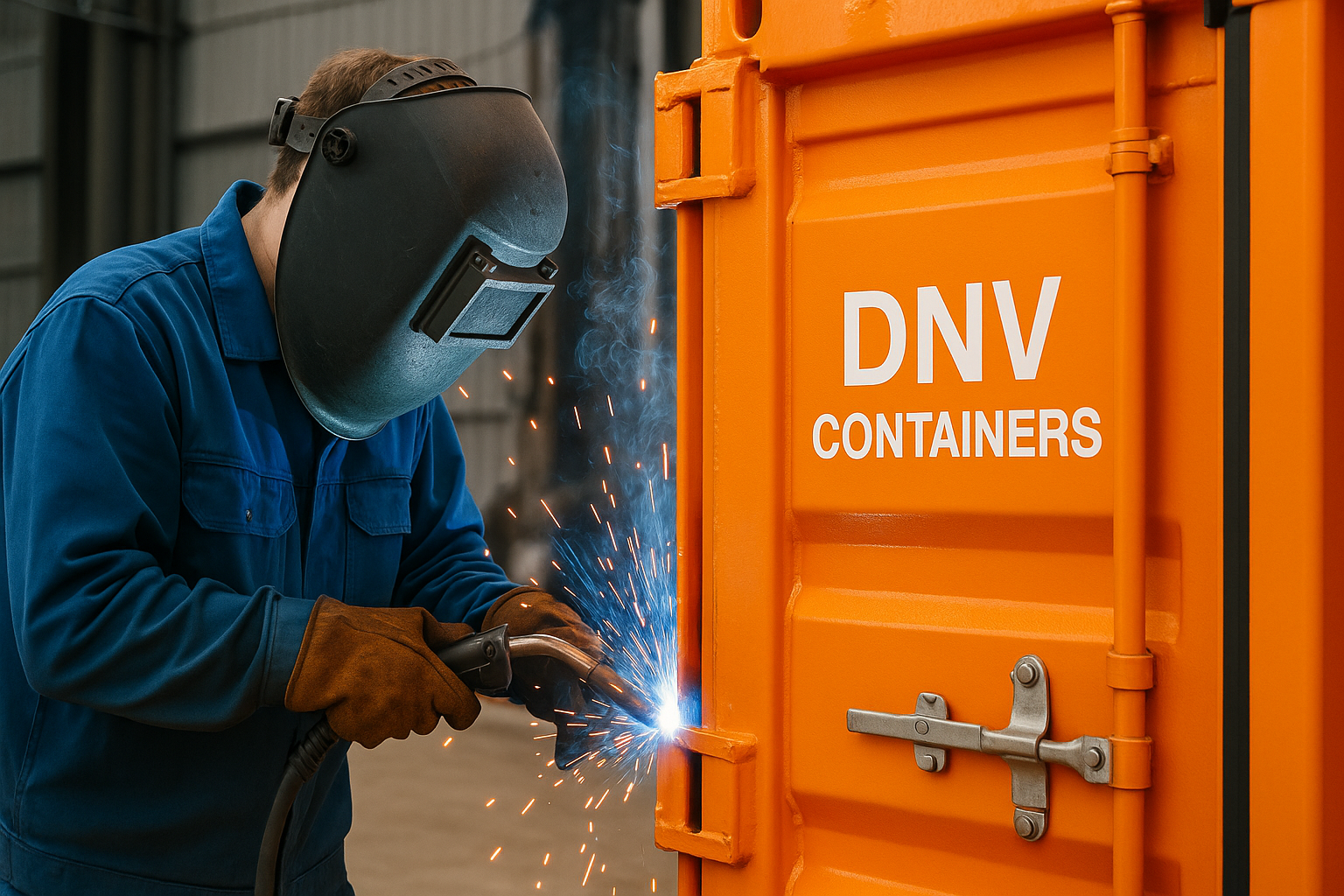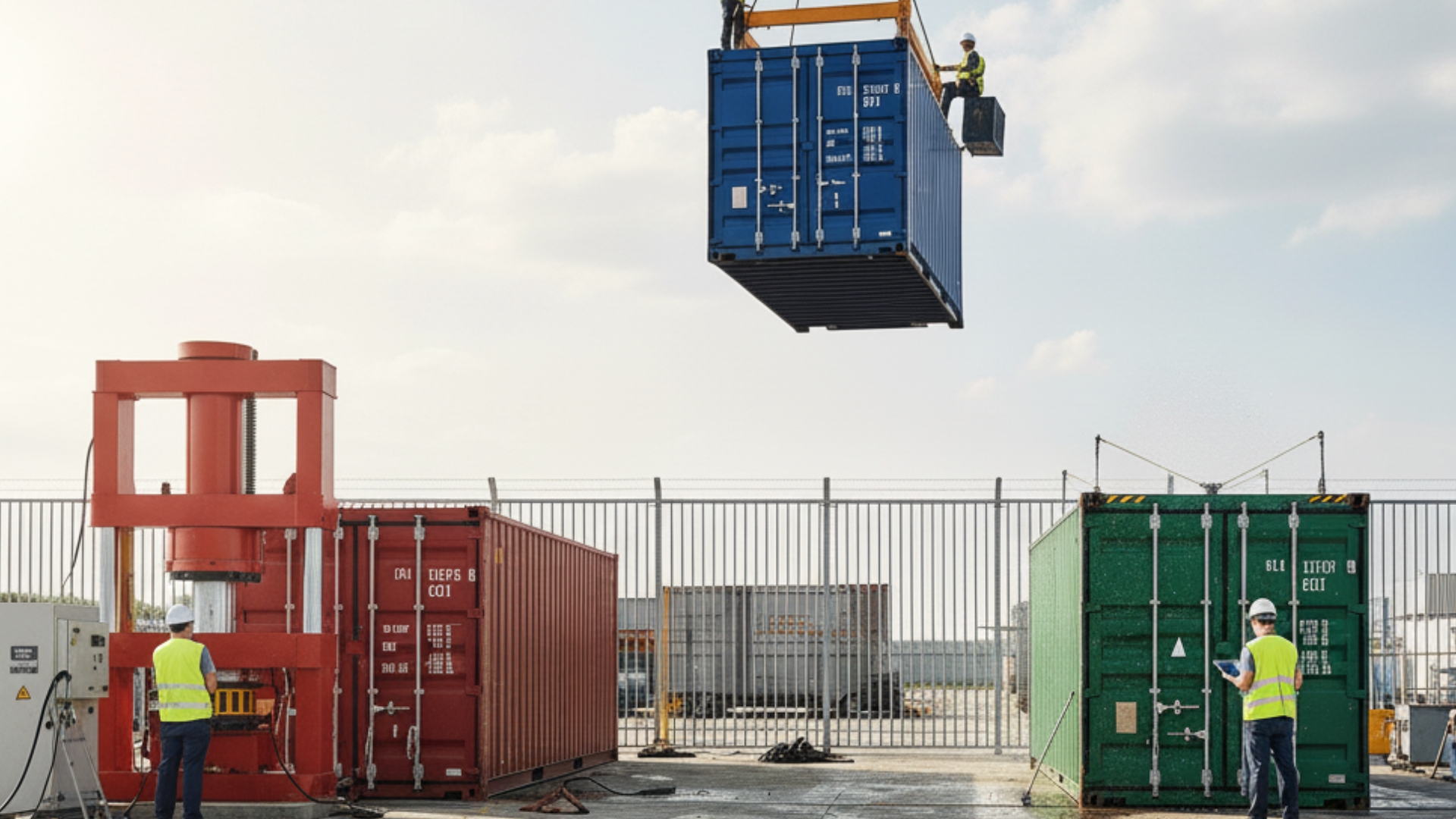

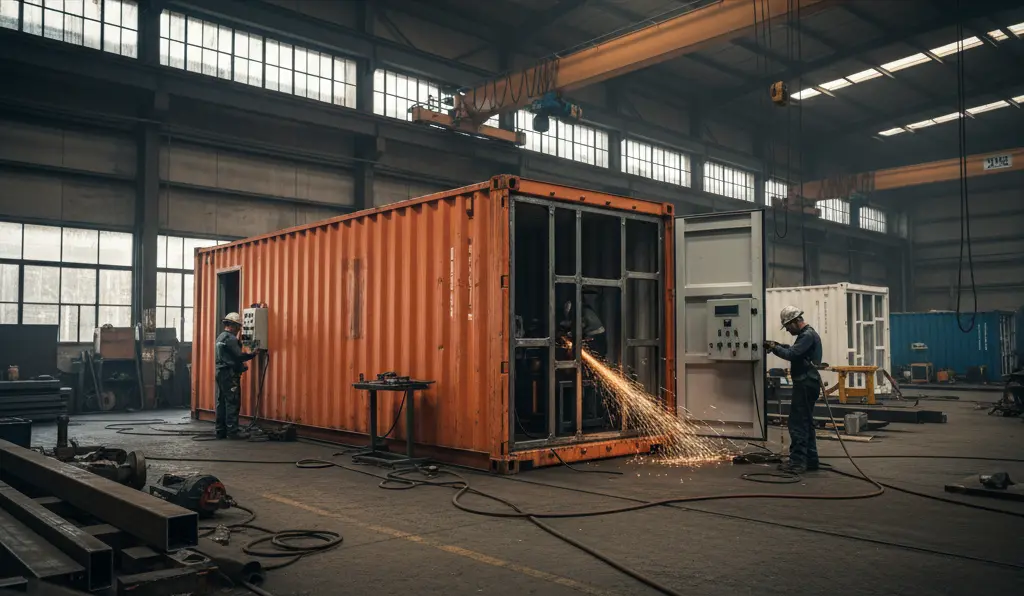
In high-risk industries such as offshore oil & gas, marine engineering, heavy construction, and industrial fabrication, welding is not just a process – it is a critical safety function. A single weld failure can lead to catastrophic consequences, including structural collapse, environmental damage, and loss of life.
This is where DNV-grade welding comes into play. Governed by the rigorous standards of DNV, DNV welding practices ensure that fabricated structures meet the highest levels of strength, durability, and reliability, even in extreme environments.
For companies In GCC , implementing DNV-compliant welding is essential when manufacturing bulletproof containers, offshore modules, and high-security structures.
What is DNV Grade Welding?
DNV-grade welding refers to welding processes, procedures, and quality controls that comply with standards issued by DNV.
These standards are widely recognized in:
- Offshore oil & gas platforms
- Marine vessels and shipbuilding
- Pressure vessels and pipelines
- Structural steel fabrication
- High-security modular units (like bulletproof containers)
Core Objective
To ensure:
- Structural integrity under extreme loads
- Resistance to corrosion and fatigue
- Long-term operational safety
Key DNV Welding Standards
1. DNV-ST-N001 (Structural Design of Offshore Structures)
Defines requirements for:
- Load-bearing structures
- Weld strength and fatigue resistance
- Environmental stress tolerance
2. DNV-ST-N002 (Materials and Welding)
This is the most critical standard for welding. It covers:
- Approved welding processes
- Material compatibility
- Heat treatment requirements
- Weld acceptance criteria
3. DNV-RP-C203 (Fatigue Design)
Focuses on:
- Weld fatigue life
- Crack initiation and propagation
- Cyclic loading conditions
4. DNV-ST-C501 (Composite Components)
Used when welding interacts with:
- Hybrid or composite materials
- Advanced modular structures
Welding Processes Approved by DNV

6
DNV does not restrict to a single welding method but approves processes based on application and material.
1. SMAW (Shielded Metal Arc Welding)
- Common in field operations
- Flexible and cost-effective
- Suitable for structural steel
2. GMAW / MIG Welding
- High productivity
- Used in controlled environments
- Ideal for repetitive fabrication
3. GTAW / TIG Welding
- High precision
- Used for thin materials and critical joints
- Excellent weld quality
4. SAW (Submerged Arc Welding
- Used for heavy sections
- High deposition rates
- Common in shipbuilding and large containers
Welding Procedure Specification (WPS)
A Welding Procedure Specification (WPS) is mandatory under DNV standards.
What a WPS Includes:
- Base material specifications
- Welding process and parameters
- Filler materials
- Preheat and interpass temperatures
- Post-weld heat treatment (PWHT)
Procedure Qualification Record (PQR)
Before production welding begins:
- The WPS must be validated through a Procedure Qualification Record (PQR)
- Test welds are created and tested for:
- Tensile strength
- Bend tests
- Impact resistance
Only after successful qualification can the procedure be used in production.
Welder Qualification (WPQ)
DNV requires:
- Certified welders
- Qualification based on:
- Welding position
- Material type
- Thickness range
This ensures that human skill matches technical standards.
Materials in DNV Welding

6
Common Materials:
- Carbon steel
- Low-alloy steel
- Stainless steel
- Offshore-grade corrosion-resistant alloys
Key Considerations:
- Material traceability
- Certification (Mill Test Certificates)
- Compatibility with filler materials
Quality Control in DNV Welding
Quality control is the backbone of DNV-grade welding.
1. Visual Inspection (VT)
- First level of inspection
- Checks surface defects
2. Non-Destructive Testing (NDT)
Ultrasonic Testing (UT)
- Detects internal flaws
Radiographic Testing (RT)
- X-ray inspection of weld integrity
Magnetic Particle Testing (MT)
- Surface and near-surface defects
Dye Penetrant Testing (PT)
- Detects surface cracks
3. Destructive Testing
- Tensile tests
- Bend tests
- Charpy impact tests
4. Dimensional Inspection
- Ensures alignment and tolerances
5. Documentation & Traceability
Every weld must be:
- Documented
- Traceable to welder and procedure
- Linked to inspection records
Heat Treatment & Stress Control
DNV welding often requires:
Preheating
- Reduces risk of cracking
- Improves weld quality
Post-Weld Heat Treatment (PWHT)
- Relieves residual stress
- Enhances durability
DNV-grade welding is not just about joining metals—it is about engineering trust, safety, and performance into every structure. From strict standards and certified procedures to rigorous quality control, DNV ensures that industrial fabrication meets the highest global benchmarks.
In industries where failure is not an option, DNV welding provides the assurance that every weld can withstand the toughest conditions—making it indispensable for modern industrial and security infrastructure.