
Introduction: Why Compliance Checks Matter Offshore
Offshore lifting operations involve serious risks. Safety is always the first priority. Containers used offshore must meet strict standards. A small failure can cause serious accidents. Equipment damage is also possible. Sometimes it leads to injury or loss of life. Non-compliant containers create operational problems. Projects can stop unexpectedly. Delays increase operational costs. Repair or replacement also increases expenses. Insurance claims may become complicated. Legal consequences may follow.
That is why compliance checks are essential.
These checks are usually done by trained inspectors. Operators also review containers before deployment. The HSE (Health, Safety, and Environment) teams monitor safety requirements. A proper inspection protects people and equipment.
Understanding DNV Offshore Container Standards
Offshore containers follow strict safety standards. One major authority is DNV [Det Norske Veritas (Norwegian for “The Norwegian Truth”)]. DNV provides certification and verification services. These standards ensure containers are safe for offshore use. The certification confirms design strength. It also confirms lifting safety and durability.
DNV standards are widely used worldwide. Industries that require these containers include:
- Offshore oil and gas
- Renewable energy projects
- Offshore construction
- Marine logistics
These sectors depend on reliable container systems.
What Makes a Container DNV-Compliant
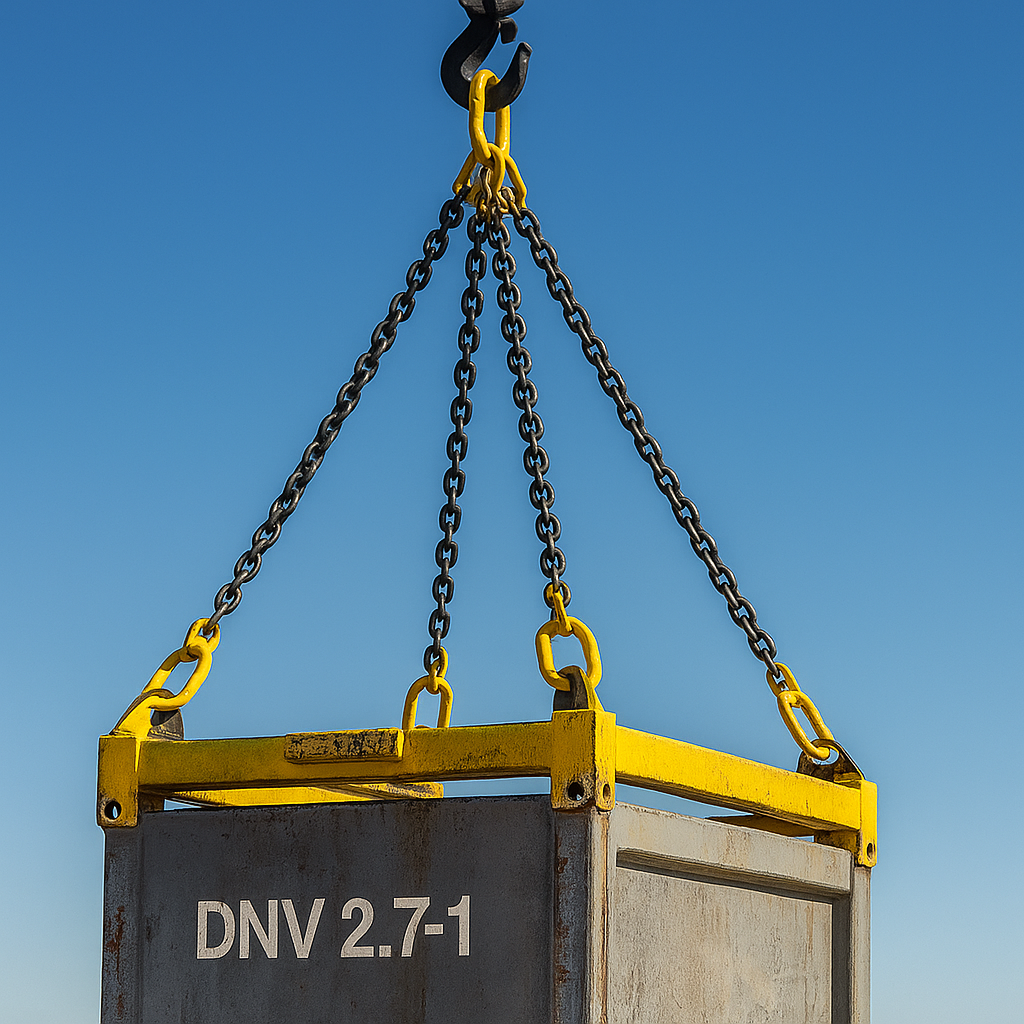
A container must meet several technical requirements. First is structural strength. The frame must handle heavy loads, lifting points must be certified. These include Padeyes and lifting lugs. Each container has a Working Load Limit (WLL). The WLL must match operational requirements. Containers also require proper inspection and certification. Only then do they become DNV compliant.
Structural Integrity Inspection
One of the most important parts of DNV container inspection is checking the container’s structural condition.
Inspectors typically examine the frame for:
- Corrosion or rust damage
- Cracks in structural members
- Deformation caused by impact or overload
Even small structural defects can weaken the container and increase the risk of failure during lifting. The inspection also covers key structural components such as corner posts, base frames, and side rails.
Welding and Structural Joint Verification
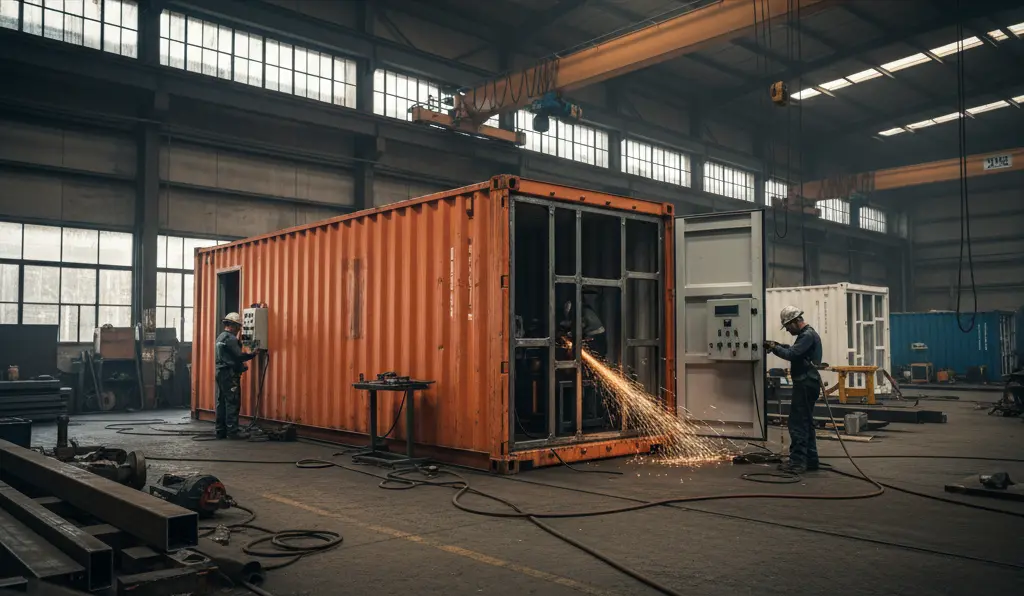
Welded joints are critical for container strength. Poor welding can weaken the structure and lead to fatigue cracks over time.
During inspection, technicians review:
- Weld quality in critical zones
- Signs of fatigue or cracking
- Evidence of improper repairs
Certified welding procedures are required to ensure the container maintains its designed strength.
Lifting Components and Padeye Inspection
Lifting components carry the entire load during offshore crane operations.
Inspectors carefully examine:
- Padeyes and lifting lugs
- Attachment points for slings
- Signs of deformation or wear
They also check sling compatibility and lifting angles. Incorrect sling angles can place excessive stress on the lifting points and cause the structural damage.
Any damage or worn lifting component must be repaired or replaced before deployment.
Load Testing and Certification Verification
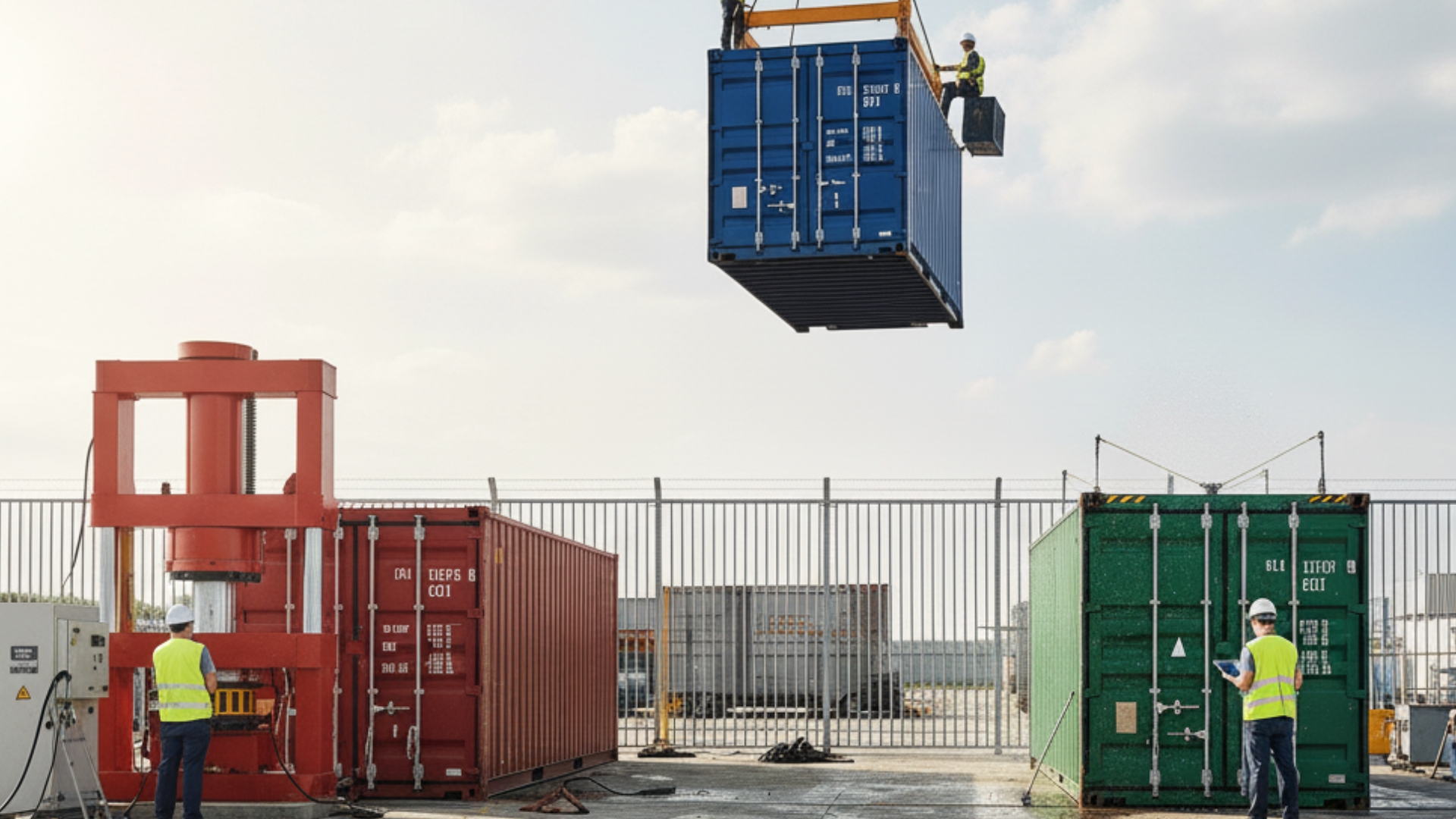
Proof load testing is another critical step in the DNV container inspection process. This test confirms that the container can safely handle the loads it is designed for.
During this stage, inspectors verify:
- The container’s Working Load Limit (WLL)
- Structural strength under test loads
- Compliance with certification requirements
Load testing provides assurance that the container can perform safely during offshore lifting operations.
Safety Markings and Identification
Clear markings are another compliance requirement. Each container should have visible identification such as:
- Container identification number
- Working Load Limit marking
- Safety labels and inspection tags
These markings help operators quickly verify the containe’s specifications and inspection status before lifting.
Common Compliance Issues Found During Inspection
During inspections, several common problems are often discovered.
These include:
- Structural corrosion or damage
- Incorrect or modified lifting points
- Missing or expired certification documents
- Non-approved structural modifications
Any of these issues can prevent a container from being deployed offshore.
Best Practices Before Offshore Deployment
To avoid compliance problems, companies should follow a few best practices. First, conduct a pre-deployment inspection before the container is sent offshore. Second, ensure that all required documentation is complete and up to date. Third, confirm the inspection validity period. Certifications usually have expiration timelines. Finally, work with certified offshore container suppliers who follow proper manufacturing and inspection standards.
Conclusion Offshore lifting operations require strict safety control, and DNV container inspection plays a vital role in maintaining that safety. Key checks include structural inspections, lifting component verification, load testing, and proper documentation review. Using certified and properly inspected containers helps prevent accidents, operational delays, and costly equipment failures. By following proper inspection procedures, offshore operators can ensure safer operations and reliable container performance in demanding offshore environments.